

Gallery
Description
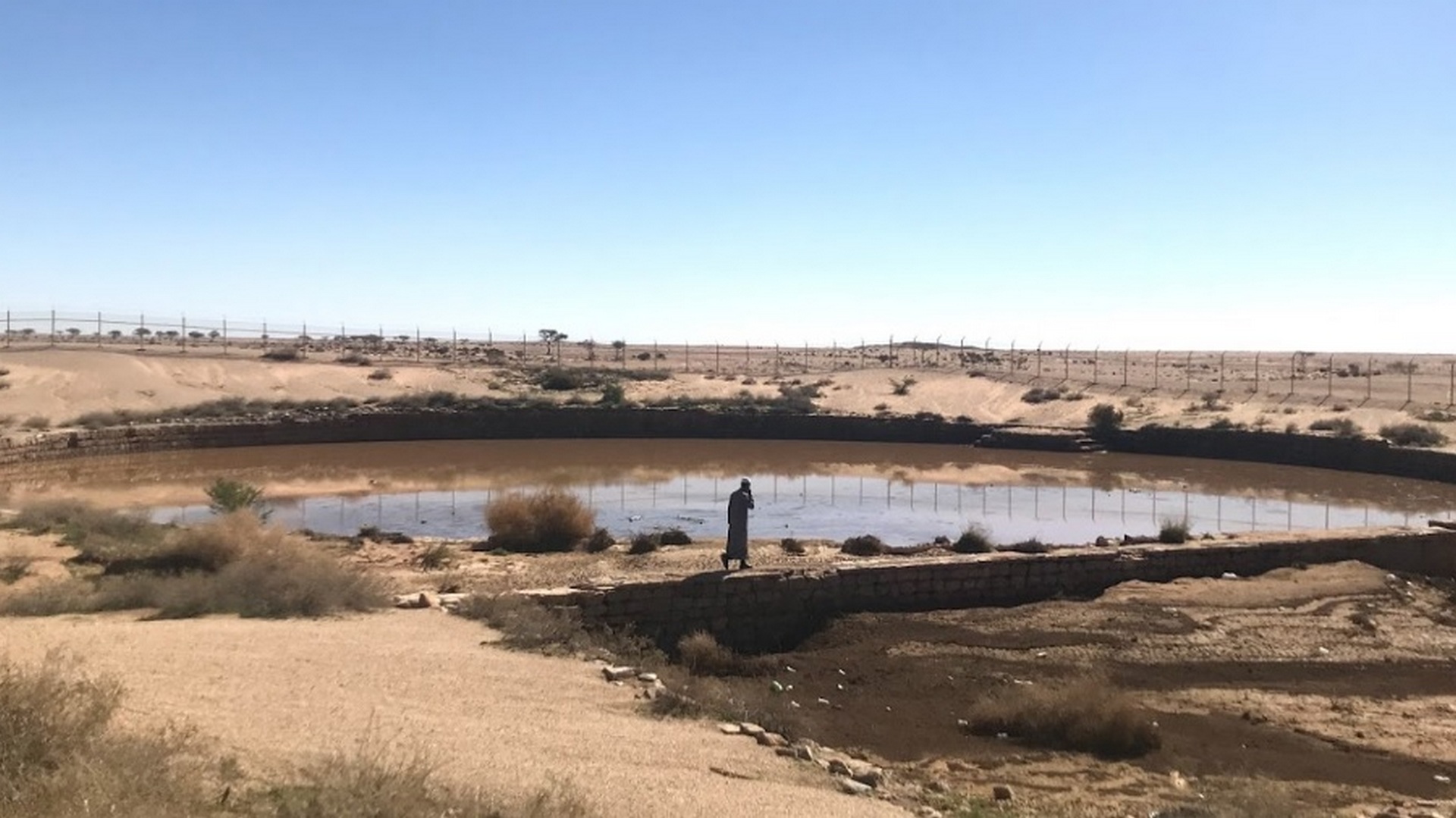
Property Name: Al Rabatha Reservoir
Inventory No: 966-4-3
Date of infill of the inventory form: 2010-03-08
Country (State party): Saudi Arabia
Province: Madinah
Town:
Geographic coordinates: 24° 51′ 26″ N
41° 26′ 10″ E
Historic Period: Early Islamic (until 660)
Year of Construction:
Style: Early Islamic
Original Use: Aqueduct
Current Use: Archaeological park
Architect: Unknown.
Significance
Of the most famous archaeological sites on the pilgrimage route from Kufa to Mecca, to the east of Medina about (200 km), has yielded archaeological excavations over (20 years) in the discovery of a fortified city, consisting of houses supported by huge walls and towers and the remains of two mosques and water tanks pottery and ceramics Industry stoneworks, jewelry, storage tanks, and huge pools. ALRABADHAH adopted on rainwater floods, wells, numbering more than (12) wells drilled in the urban boundary of the city and residents benefited from the pools ALRABADHAH neighbors two of the pools of the pilgrimage route (the path of Zubaydah) in addition to other reservoirs along the road and dug wells in the vicinity of ALRABADHAH and bodies of water in the springs and cavities of rock and natural basins. The most prominent features of ALRABADHAH is the design for water conservation reservoirs (tanks) was built under the level floors of rooms and inner courtyards and corridors in all housing units and built this beautiful reservoir engineering way, the average depth of about one tank (2 m) below the level of floors and the same length as the room, stones used in building walls and covered with plaster and strong sqft reservoirs stone rectangular leds sealed the openings, provided to each tank top slot to cover the neck by a stone. And the tank was filled with water in one of two ways: 1. Stone or pottery Tubes, designed in a way pass the rainwater falling on the roofs of houses into the reservoirs. 2. Transfer of water directly from the reservoirs and wells to the tanks when needed or in non-rainy seasons. The design of reservoirs to conserve water in this way within the Rbzp tranquility and safety by providing clean water and diverse ways. Dozens of tanks were detected , some in groups and some other tank under the floor of each room and according to the selected area, provided the pipes, some pottery and plaster on the surfaces of water distribution among them, and some clay pipes and plaster on the surfaces of water distribution, including some provided sedimentation tanks (drained) before water entering the reservoir of the President. The number of reservoirs discovered approximately (200) reservoir, a keen Rabzh people benefit from these reservoirs in all periods and phases, have discovered some of the layers below the level of housing remained in use early in the subsequent periods. This technique was developed to save water as a result of the increasing numbers of pilgrims were convoys convoy consisting of one (15.000) to (20.000) of the camel, and the narrator, the value of water in times of drought and tribulations of dinars per camel.
Selection Criteria
i. to represent a masterpiece of human creative genius
iv. to be an outstanding example of a type of building, architectural or technological ensemble or landscape which illustrates (a) significant stage(s) in human history
vi. to be directly or tangibly associated with events or living traditions, with ideas, or with beliefs, with artistic and literary works of outstanding universal significance
State of Preservation
In the book (Darb Zubaydah), Dr. Saad Al-Rashed the Reservoir has a diameter of (64 m) with a depth of (5 m), as for the refinery pool it is a rectangular shape its length is (55 m) and width (18 m) shallow depth, used to remove residues and dirt from the water before entering the main reservoir. The refinary pool leading to the main reservoir
References
Darb Zubaidah, The Hajj Rout From Kufa To Makkah Almukarama – Historical And Cultiral Study, Dr. Saad Alrashid (1993), Alwattan Publishing And Media, Riyadh.
Alrabadhah – A Picture Of An Early Islamic Civilization In The Kingdom Of Saudi Arabia, Dr. Saad Alrashid, King Saud University – College Of Arts, Ksu Press Isbn 5 582 78390 9