

Gallery
Description
Property Name: Seven Mosques
Inventory No: 966-4-16
Date of infill of the inventory form: 2010-05-22
Country (State party): Saudi Arabia
Province: Madinah
Town: Madinah
Geographic coordinates: 24° 28′ 40″ N
39° 35′ 44″ E
Historic Period: Early Islamic (until 660)
Year of Construction: 627
Style: Abbasid
Original Use: Mosque
Current Use: Mosque
Architect: Unknown
Significance
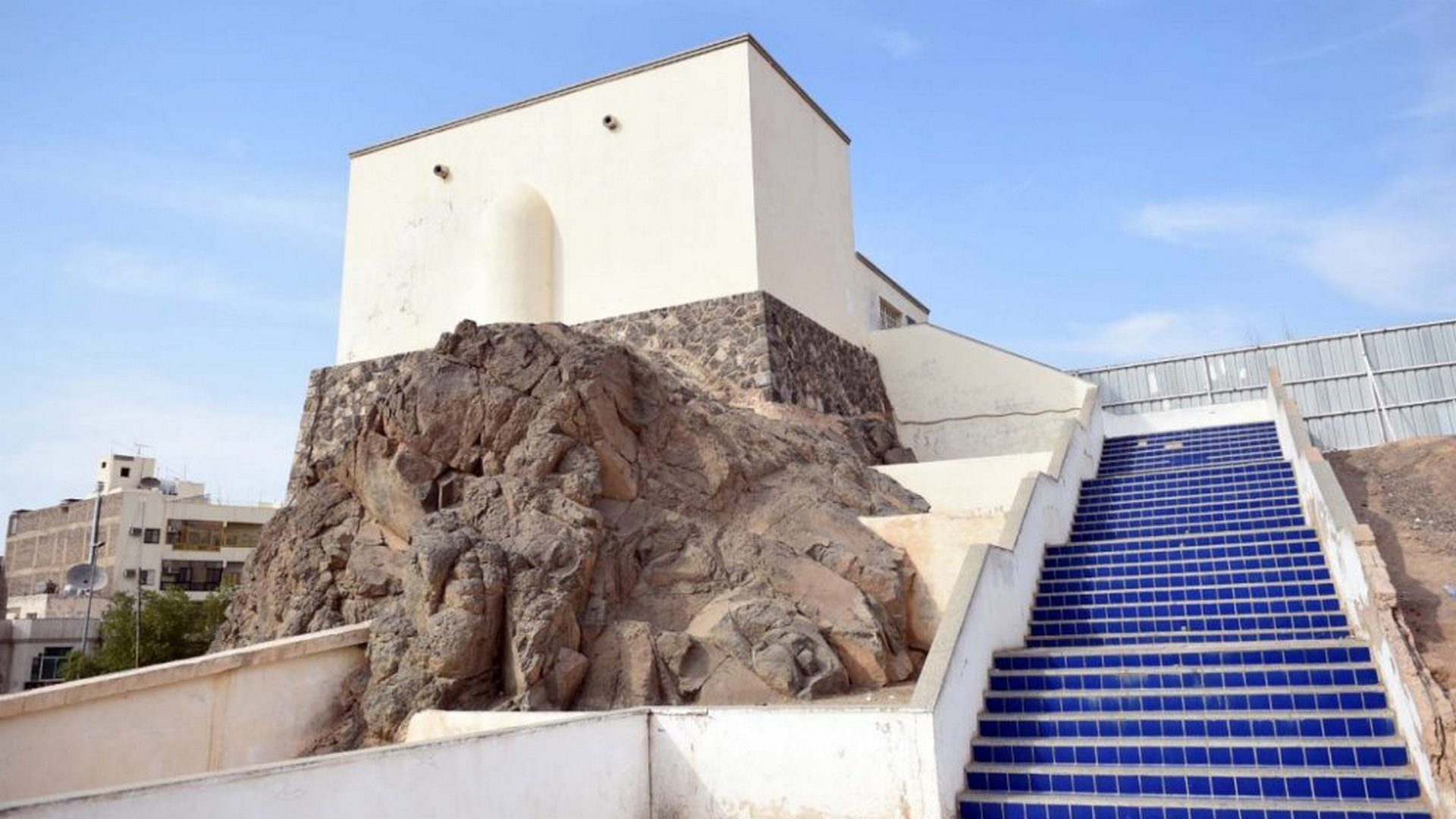
It is a group of small mosques, the real number is six, not seven, but it was famous with this name, and some believe that the Qiblatain Mosque is added to it, among the Islamic places and monuments that the pilgrims and visitors of Medina are keen to frequent during the seasons of Hajj, Umrah and visitation, and these mosques are:
Al-Fath Mosque or (Al-Ahzab): It is the most important of the seven mosques, and it was named by this name because the Messenger of God, may God’s prayers and peace be upon him, prayed in it during the events of the invasion, and asked God for conquest and victory. The Al-Fath Mosque is the largest of the seven mosques and it is built over a mound at the western slope of Mount It was built by Umar bin Abdul Aziz during the period of his leadership over the city with stones from 87-93 AH, then it was renewed in 575 AH by the order of the Minister Saif al-Din bin Abi al-Hija, then it was rebuilt during the reign of the Ottoman Sultan Abdul Majid I in 1268 AH 1851 CE.
Salman Al-Farsi Mosque: This mosque is located directly south of the Al-Fateh Mosque and twenty meters away at the base of Sala` Mountain, and it was named after the companion Salman Al-Farsi who had the idea of digging a trench to fortify the city from the invasion of the parties. It consists of one portico, 7 meters long and 7 meters wide, and a small step 2 meters wide. This mosque was built in the Emirate of Omar bin Abdul Aziz, also on Medina, and was renewed by order of Minister Saif Al-Din Abi Al-Hija in 575 AH. It was rebuilt during the reign of the Ottoman Sultan Abdul Majid I.
Abu Bakr Al-Siddiq Mosque: The Abu Bakr Al-Siddiq Mosque is located southwest of the Salman Mosque and fifteen meters away from it, and one of the accounts mentioned that Abu Bakr Al-Siddiq, may God be pleased with him, prayed in this Eid mosque during his caliphate That is why the mosque was called by his name, and it is also one of the mosques in which the Messenger of God, may God bless him and grant him peace, prayed the Eid as well.
Omar Ibn Al-Khattab Mosque: The Omar Ibn Al-Khattab Mosque is located ten meters from the Abu Bakr Mosque to the south and opposite the Al-Ghumama Mosque near the Prophet’s Mosque, and the source books did not mention anything about this mosque attributed to Omar bin Al-Khattab, but perhaps this ancient mosque was in the location of the Dorra Perhaps Umar ibn al-Khattab prayed the Eid during his succession and was attributed to him. It is in the form of a rectangular portico and has a wide, not covered roof in its image, rising from the ground eight degrees, and the method of its construction is identical to that of the Al-Fath Mosque, and it may have been built and renovated with it.
Ali bin Abi Talib Mosque: It is located to the east of the Fatima Mosque on a high, rectangular mound, 8.5 m long, 6.5 m wide, and a small step. This mosque was built and most likely renewed with the Al-Fateh Mosque, and it is narrated that Ali killed Amr bin Wad al-Ameri, who crossed the trench in the Battle of al-Ahzab.
Fatima Al-Zahra Mosque: It is called in the historical sources the Saad bin Muadh Mosque, and it is the smallest mosque in this group, its area is 4 x 3 m and has a small degree. And his last building in the style of the buildings of the same group, it is likely that it was in the Ottoman era during the reign of Sultan Abdul Majid I 1268 AH / 1851 CE.
Selection Criteria
ii. to exhibit an important interchange of human values, over a span of time or within a cultural area of the world, on developments in architecture or technology, monumental arts, town-planning or landscape design
State of Preservation
Moderately preserved
References
Commission of Tourism and Heritage