

Gallery
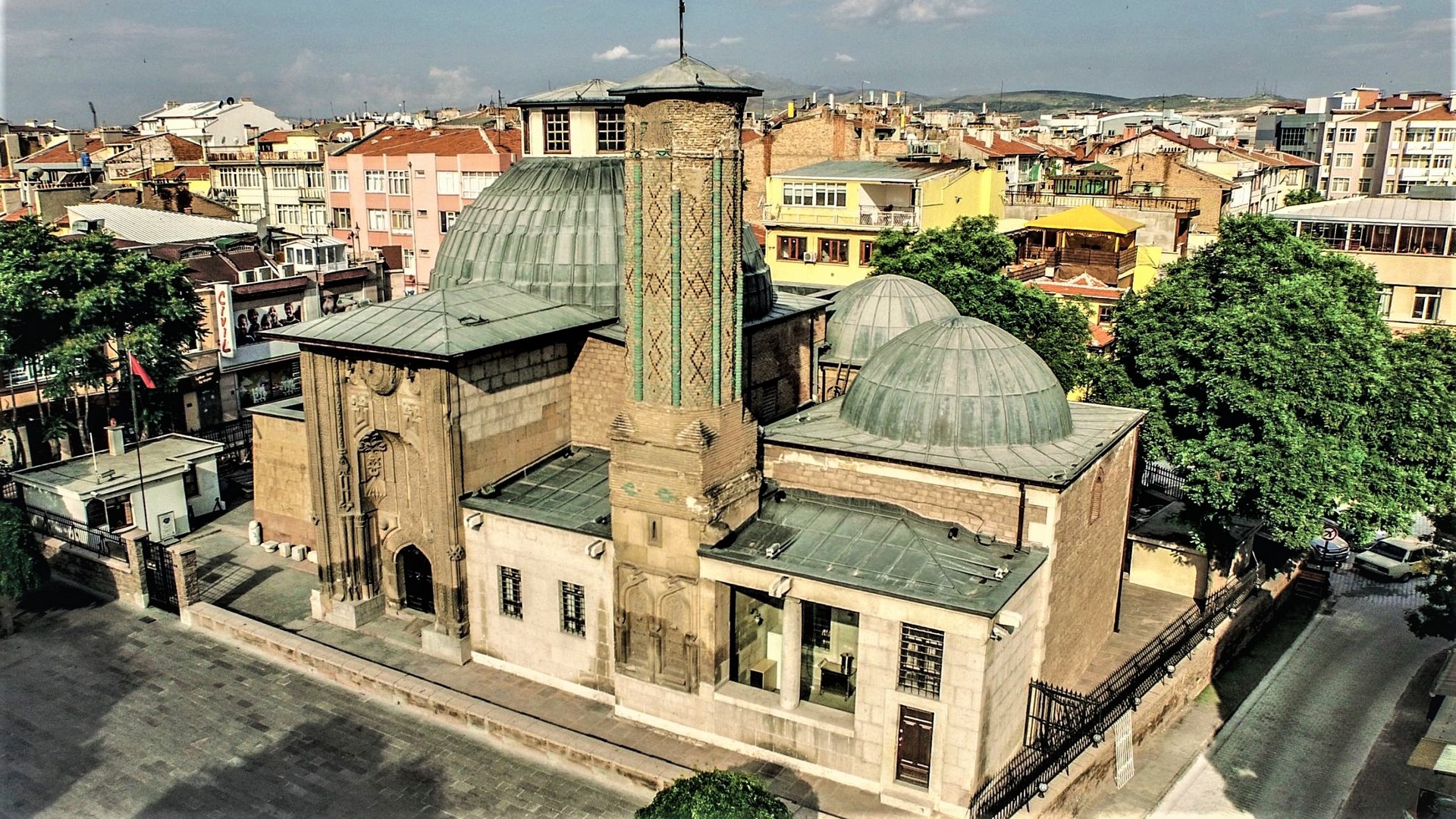
Description
Property Name: Ince Minareli Madrasa
Inventory No: 90-332-2
Date of infill of the inventory form: 2009-10-22
Country (State party): Turkey
Province: Konya
Town:
Geographic coordinates: 37° 52′ 22.55″ N
32° 29′ 24″ E
Historic Period: 13th century, 2nd half
Year of Construction: 1260- 1265
Style: Seljuk
Original Use: Madrasa
Current Use: Museum
Architect: Keluk bin Abdullah
Significance
Ince Minareli Madrasa, founded on the Alaeddin Hill is a 13th century monument of Anatolian Seljuk Empire. The madrasa is one of the most beautiful examples that furnish great stone workmanship of that era. As the name suggests the madrasa was given the name ‘Ince Minare’, meaning thin minaret for its two slender minarets. However one of these minarets were collapsed after a thunderbolt and the other is reduced to the lower portion. Today the building is one of the attraction points for tourism as being used as a ‘Stone and Timber Artifacts Museum’ since 1956. Inscriptions of that era’s art, reliefs, and wooden carvings are being established here; on the other hand the madrasa itself is also an art product.
Selection Criteria
iv. to be an outstanding example of a type of building, architectural or technological ensemble or landscape which illustrates (a) significant stage(s) in human history
vi. to be directly or tangibly associated with events or living traditions, with ideas, or with beliefs, with artistic and literary works of outstanding universal significance
State of Preservation
The madrasa is a well preserved one with its original details but however deterioration because of external affects can be seen on the building. One of the two slender minarets has been collapsed as a result of a thunderbolt in 1901. The remaining minaret has been reduced to a lower point. The madrasa functioned as an educational place until the end of the 19th century. It is known that the building has gone under some repairs between 1876 and 1899. In the period of Republic, in 1930s the building was repaired again and later, in 1956, the madrasa was transformed into a ‘Stone and Timber Artifacts Museum’. Presently the museum is an attraction place for tourists.
References
Stierlin, Henri. Turkey From Seljuks to the Ottomans, TASCHEN, 2002, Köln
Caner, Çağla; Kuran, Gökçe Şimşek. SEARCHING TRACES OF A DONOR: SAHİPATA IN SELJUK ARCHITECTURE. Faculty of Architecture, Middle East Technical University, Ankara
Stierlin, Henri. Architektur des Islam von Atlantik zum Ganges, Atlantis, Switzerland, 1979