

Gallery
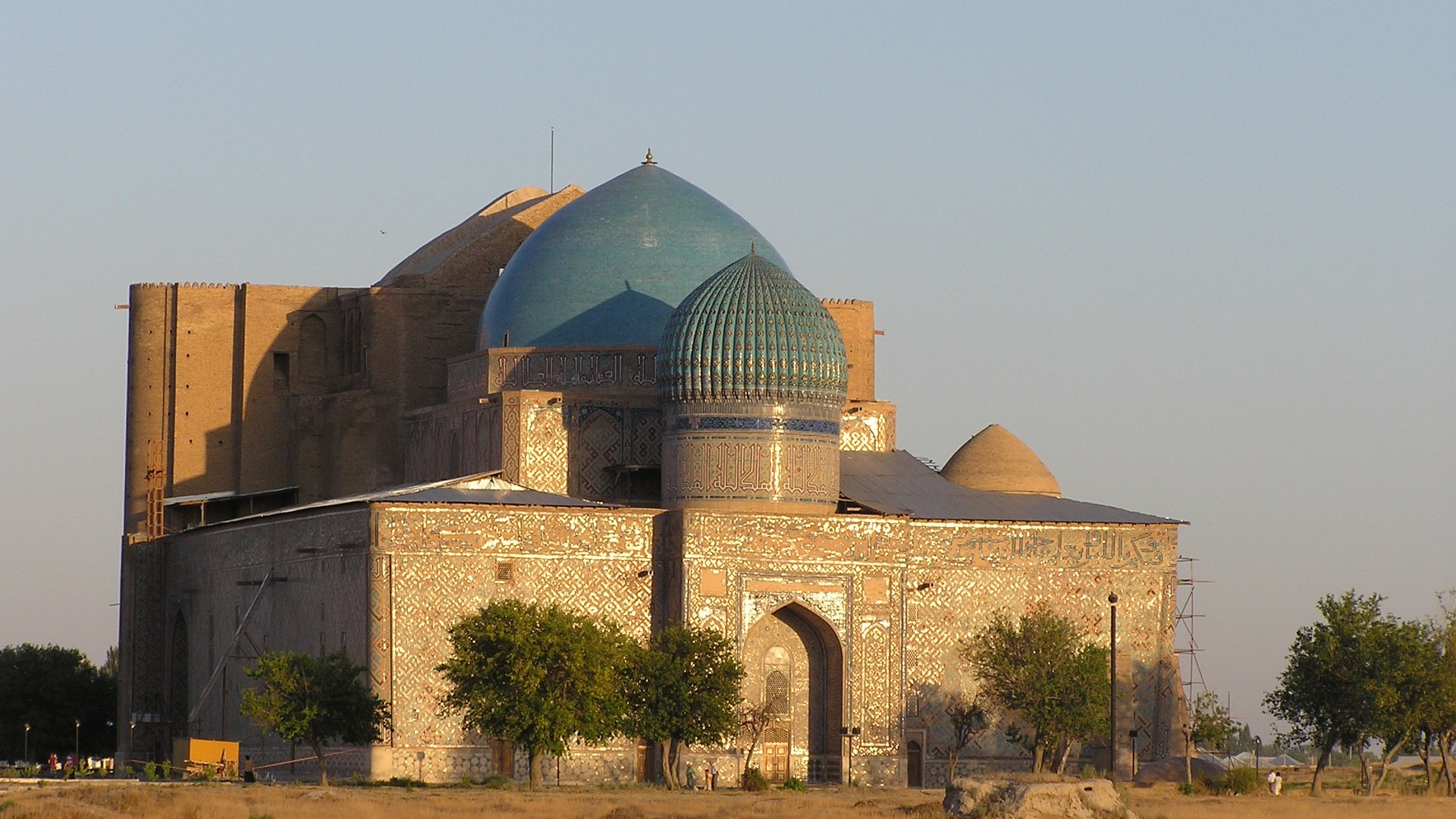
Description
Property Name: The Mausoleum of Khoja Ahmed Yasavi
Inventory No: 7-2533-1
Date of infill of the inventory form: 2008-01-15
Country (State party): Kazakhstan
Province: Turkestan
Town:
Geographic coordinates: 43° 17′ 51.78″ N
68° 16′ 15.84″ E
Historic Period: Timurid
Year of Construction: 1389-1405
Style: Timurid
Original Use: Mosque, Mausoleum
Current Use: Mosque, Mausoleum
Architect: Unknown
Significance
–
Selection Criteria
i. to represent a masterpiece of human creative genius
iii. to bear a unique or at least exceptional testimony to a cultural tradition or to a civilization which is living or which has disappeared
iv. to be an outstanding example of a type of building, architectural or technological ensemble or landscape which illustrates (a) significant stage(s) in human history
State of Preservation
After the recent works, the structure is considered stable, but the authorities still report on problems of rising damp and salts, due to high water table. There is also need to continue monitoring the behaviour of the structure of the building and the materials after the restoration.
The structure was commissioned in 1389 by Timur, who ruled the area as part of the expansive Timurid Empire,[1] to replace a smaller 12th-century mausoleum of Khoja Ahmed Yasawi (1093–1166). However, construction was halted with the death of Timur in 1405.Despite its incomplete state, the mausoleum has survived as one of the best-preserved of all Timurid constructions.
The northern part of the old citadel wall was rebuilt in the 1970s, providing an enclosure for the mausoleum and adjacent buildings. The mausoleum has preserved its original vaults’ structures and a large part of its external decoration. Original remains of the wall paintings are visible in the interior, and it is possible that more may be discovered under the whitewashed surfaces when further restoration work is undertaken.
It has been protected as a national monument, while UNESCO recognized it as the country’s first site of patrimony, declaring it a World Heritage Site in 2003.
References
–